
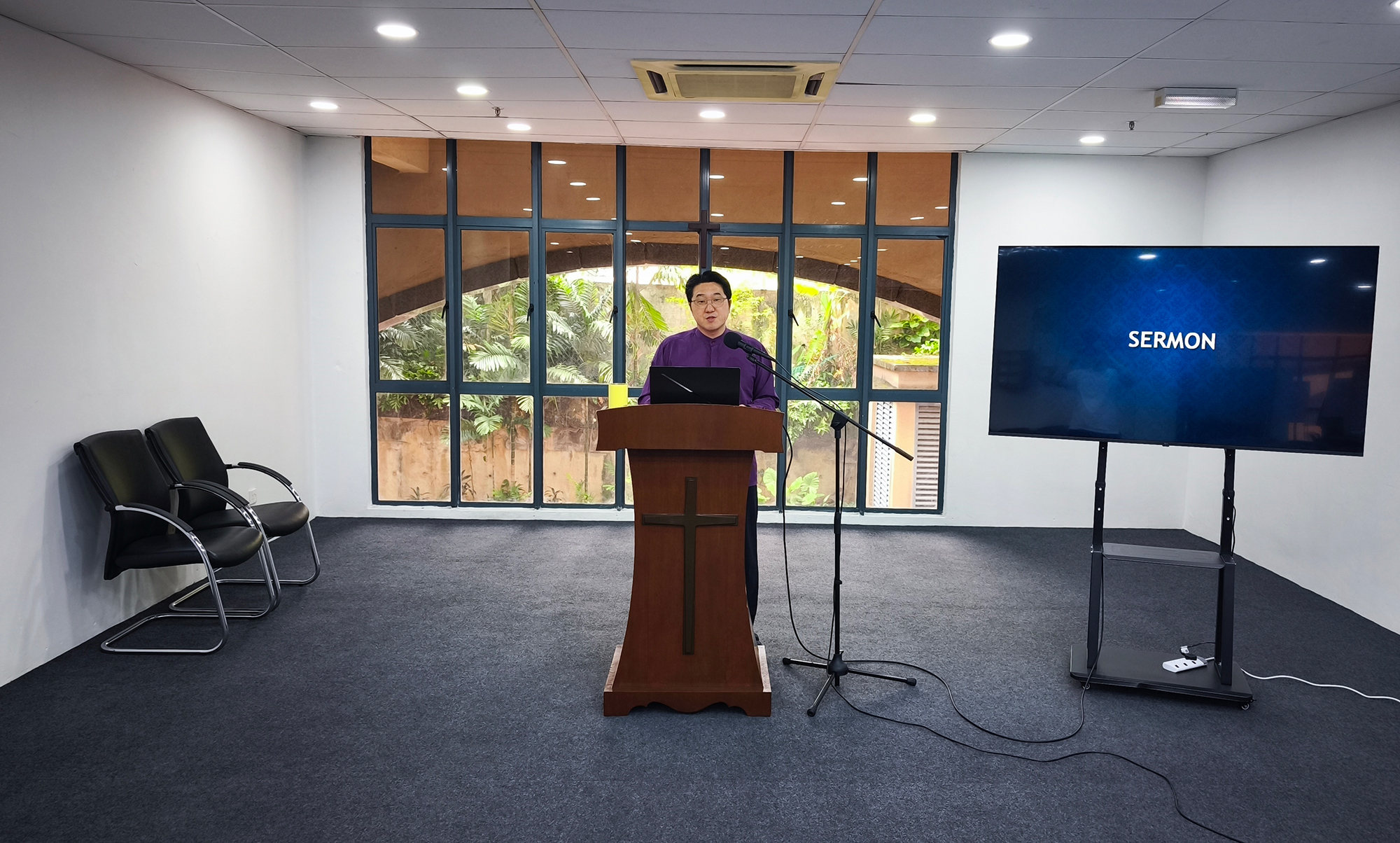
On September 13, Kuala Lumpur Immanuel Church held its second Sunday service of the month and meditated deeply on the faith of Abraham, the ‘father of faith’.
Pastor Samuel Chang delivered his first sermon after returning from Korea, titled “Abraham Who Became a Blessing,” based on Genesis 12:1-3.
Pastor Chang noted that while God is the ultimate source of blessing, He entrusts this authority to those centered on faith, meaning that blessings and curses for others are tied to this covenantal calling. Believers chosen by God must maintain this core identity and self-awareness—just as Jesus maintained His identity as the Son of God—regardless of difficult external environments.
Delving into Abraham’s background, the Pastor highlighted that God called Abraham out of the house of Terah, an idol merchant, subverting the worst possible family lineage through divine grace [cite: 8]. Rather than conforming to the toxic traditions of his ancestors, Abraham practiced a “great rejection” (hwa-i-bu-dong, remaining harmonious yet distinct), letting internal spiritual longings and a desire for atonement guide him. Pastor Chang encouraged believers trapped in difficult or miserable backgrounds not to fall into fatalism, pointing out that God’s grace transforms adverse starting points into miraculous turning points [cite: 8].
The sermon examined how God reshaped Abraham’s identity and marked his covenant community through renaming and circumcision. God changed Abram (“great father”) to Abraham (“father of many nations/faith”), anchoring him in a new legacy rather than idol-worshiping ancestry [cite: 8]. Furthermore, the introduction of circumcision in Genesis 17 symbolized strict separation, distinctiveness, and holiness, which the New Testament (Romans 2:28–29) internalizes as the circumcision of the heart by the Spirit.
Addressing human pride, Pastor Chang stressed that humans have nothing to boast of genealogically before God, as Romans 3:10 and 1 Cor 1:26–29 confirm that God chooses the weak, foolish, and low-born to prevent any flesh from boasting. Justfitting into early church patterns where high social standing was rare, modern believers must reject human conventions, recognizing that justification comes exclusively through faith rather than human merit or legalism.
A central pivot of the message was God’s command to leave country, kindred, and father’s house (Genesis 12:1), which represent the foundational layers of human existence: geographical ties, bloodlines, and biological life roots. Pastor Chang explained that “leaving” means transcending first-dimensional fatalism to embrace God’s promises and a creative, future-oriented life. Echoing the meaning of “Hebrew” (one who crossed the river), true spiritual ancestors break free from stagnant enclaves to step into larger spiritual dimensions.
Expanding this principle, the Pastor contrasted biological loyalties with kingdom priorities, noting Jesus’ declaration in Mark 3:31–35 that whoever does God’s will is family, and Luke 9:59–60 regarding letting the dead bury their dead to advance the kingdom [cite: 8]. God calls believers to leave lesser attachments not out of harsh isolation, but to anchor them in higher holiness, unity, and life-giving history rather than recycled generational death [cite: 8].
Pastor Chang concluded by outlining the fivefold covenantal blessings pronounced upon Abraham: making him a great nation, blessing and enlarging his name, making him a blessing, reciprocally blessing or cursing those who interact with him, and blessing all earth’s families through him. Urging the congregation at KL Immanuel Church to break free from environmental traps, the service closed with a traditional Trinitarian benediction invoking grace, love, communion, and abundance.